
Using Bookends as Decorative Accents in Your Home
Bookends anchor books on shelves while acting as distinctive visual features in a room. A single pair can introduce bold color, sculptural shapes, or metallic shine that draws the eye, especially on a desk or mantel. In homes with open shelving, three to five pairs are common, but too many can clutter limited space or distract from other decor. Styles range from classic stone to playful acrylic, allowing them to fit both formal libraries and casual bedrooms.
The right bookends can shift a room's mood, but oversized or overly ornate ones risk crowding shelves and making dusting more difficult.
Bookends that are heavier than the books they support prevent accidental slips; lightweight designs often fail to hold larger hardcovers in place.
How Bookends Change a Room’s Feel
A pair of sculptural bookends on a shelf can shift the mood of a living space from utilitarian to curated in seconds. Contrasting materials such as brass paired with dark wood signal a deliberate design choice, while playful shapes or brightly colored ceramics draw the eye and spark conversation.
When bookends are chosen for their shape, material, or historical reference, they add character that plain shelving cannot replicate.
Many miss the impact of scale–oversized bookends can overpower a small table, while petite designs get lost among large volumes. Matching the visual weight of the bookends to the surrounding décor creates balance and lets them frame not just the books, but the entire vignette.
Choosing Bookends That Match Your Style
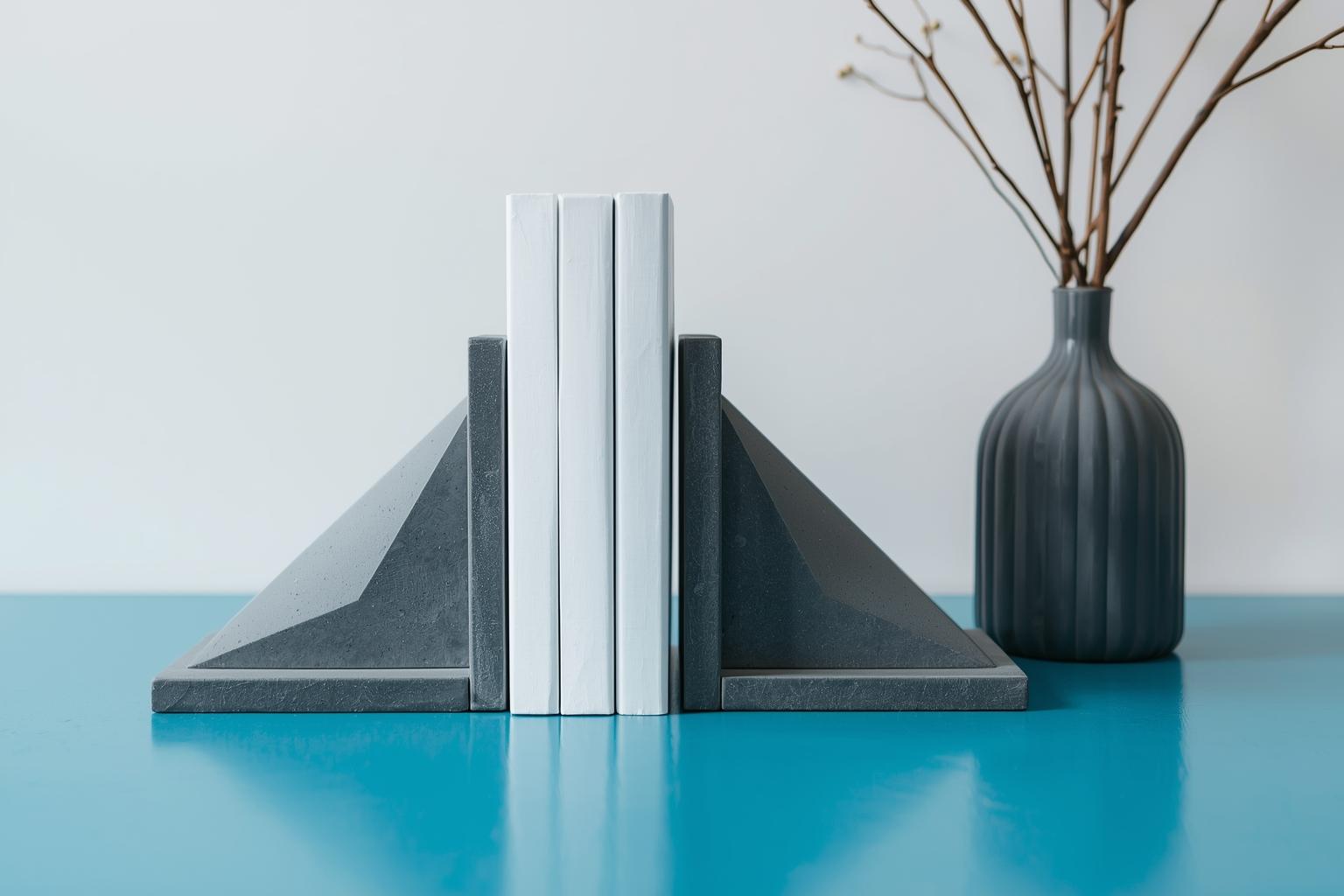
A pair of bookends can shift a shelf from pure storage to a personal statement. Shapes, materials, and colors each influence the mood of a space. Selecting the right ones prevents visual clutter and creates a sense of harmony.
Blending with Modern Interiors
Polished metal or matte ceramic bookends with simple angles blend easily into modern living rooms that use glass or unadorned wood. Bulky or ornate shapes interrupt the clean lines that define a minimalist style.
A geometric block in white concrete holds hardcovers upright but does not compete with a sculptural lamp or a glass coffee table. Transparent acrylic models practically disappear on open shelving yet still anchor magazines or art books. Metal bookends with a brushed finish reflect light from recessed fixtures without drawing the eye.
Oversized animal motifs or painted vintage pieces stand out too much against monochrome walls and steel shelving. Slim steel bars or cubes in a single color bring order to a row of design books and echo the calm of a neutral palette.
A frequent mistake lies in choosing bookends that introduce too many materials or colors. Matching the finish of fixtures or furniture legs creates a sense of unity.
Pairing with Classic or Eclectic Decor
Mahogany or walnut bookends with hand carved flourishes reinforce the quiet symmetry found in traditional rooms. Contrastingly, mixed style interiors benefit from pairing unexpected elements, such as brass animals or stone spheres, to break up predictability.
| Material | Typical Shape | Decor Style | Visual Impact |
|---|---|---|---|
| Solid brass | Animal figure | Eclectic | Creates a focal point with reflective surfaces and playful forms |
| Marble | Simple column | Classic | Blends into symmetrical arrangements and suggests permanence |
| Vintage glass | Geometric block | Eclectic | Catches light and adds color variation to mixed displays |
| Hand carved wood | Scrolled bracket | Classic | Echoes antique furniture and detailed trims |
| Ceramic | Abstract wave | Eclectic | Introduces organic lines and softens rigid layouts |
Contrast between bookends and shelves draws attention to both. Overly uniform shapes in an eclectic room mute the intended energy of the display.
Smart choices in materials and scale ensure the bookends feel at home among other objects. A strong match between form and surroundings draws the eye for the right reasons.
When Bookends Overwhelm a Space
A ten inch marble bookend on a narrow floating shelf can dominate the entire wall. Heavy or intricate designs often steal attention from books and smaller decor, creating visual imbalance. Several telltale signs point to when the accent has become a distraction:
- Exceeds shelf depth – bookend extends past the shelf edge
- Obscures spines – blocks titles or author names from view
- Outshines contents – more noticeable than the books themselves
- Crowds accessories – leaves no room for plants or art objects
A large or flashy piece meant to frame a row of novels often overpowers every other item in the room. When the eye lands on the holder instead of the collection, a lighter material or a lower profile usually restores balance.
Creative Ways to Display Bookends
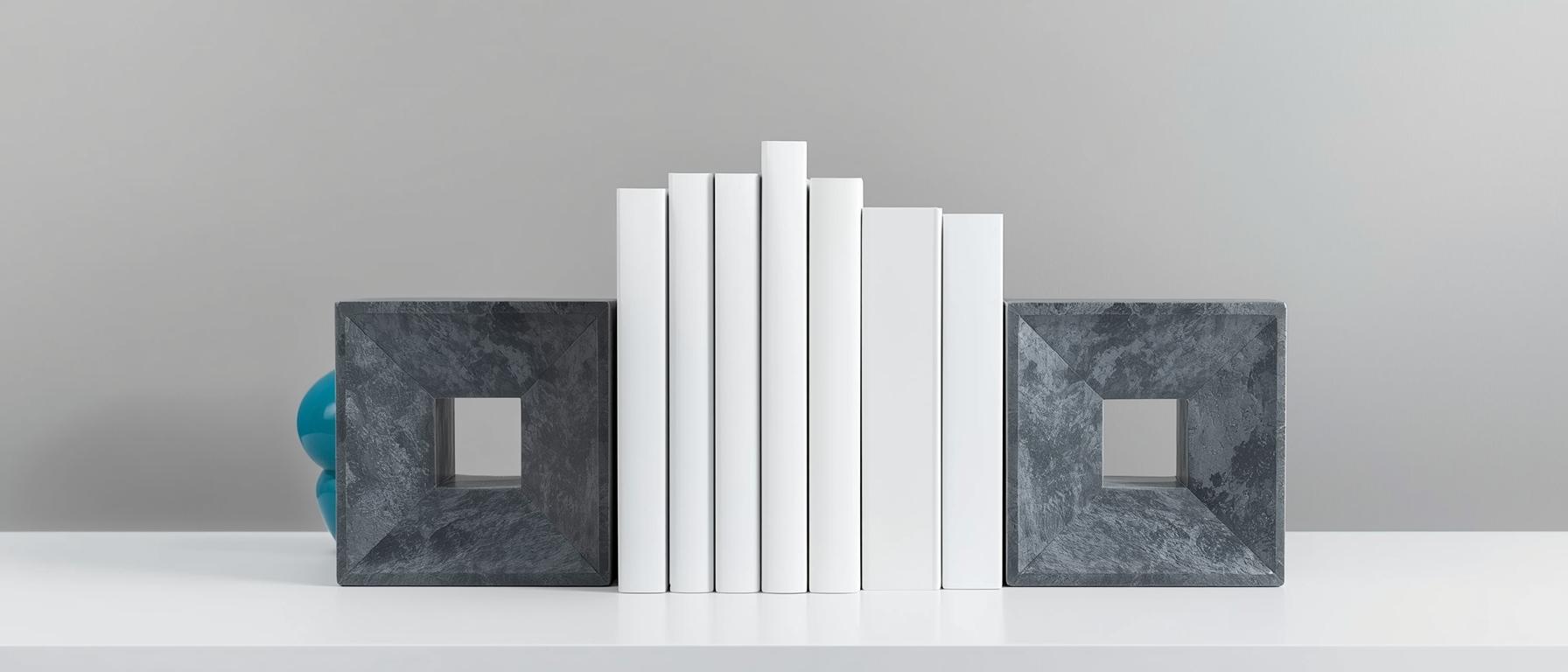
Bookends transform from simple shelf supports into versatile accents that elevate any space. Beyond their classic role, these objects can frame mantels, organize kitchen counters, or anchor floating desks. Their design and placement often spark conversation while adding structure to displays.
Bookends as Table Centerpieces
A pair of sculptural bookends can draw more attention on a table than they ever will on a shelf. Metal, marble, or wood bookends with strong silhouettes contrast with flat surfaces and transform a bland table into a striking display. Placement shifts the mood entirely:
- Arrange the bookends at either end of a hardcover stack to anchor cookbooks, art volumes, or photo albums.
- Position the bookends at the center of the table, flanking a low floral arrangement or a bowl of fruit, creating structure and height.
- Use one bookend as a standalone object beside a tray of glassware or candles for visual interest without symmetry.
- Group the bookends with small sculptures or ceramics to create a collected look that mixes function and form.
This approach works especially well when the table is otherwise uncluttered and needs a single bold statement. Select pieces that echo other textures or colors in the space for a unified effect.
Highlighting Art and Collections
A single pair of heavy bookends can transform a display by drawing the eye to a specific object or artwork. This effect works best where open shelving or a wide mantel leaves room for visual contrast.
Placing bookends on either side of a framed photograph or a small sculpture creates a deliberate focal point. For instance, glass bookends on a wood shelf can reflect light back onto a ceramic figurine, intensifying the color and form. In collections of vintage cameras or pottery, matte stone or dark metal bookends push the objects forward, making them stand out against pale walls.
Alternating bookends with upright art books creates small vignettes between each pair. This approach breaks up a long shelf and allows miniature paintings or rare collectibles to gain prominence. When positioned at the end of a row of objects, a sculptural bookend can act as a visual anchor, preventing smaller pieces from visually drifting into the background.
This approach delivers the strongest impact in rooms with neutral palettes or minimal clutter. Choosing a bookend material that contrasts with both the object and the shelf increases the effect.
Unexpected bookend placements highlight personal style and showcase creativity. Pairing them with objects outside the library turns functional pieces into focal points.
